Extra Large Double-Door Folding Dog Crate Setup Guide
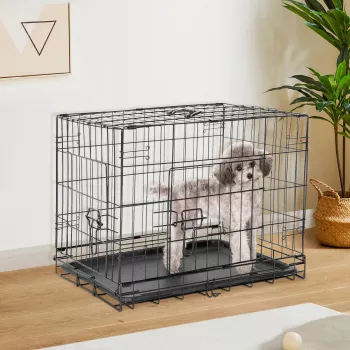
A Clean, Secure Setup for Home and Travel
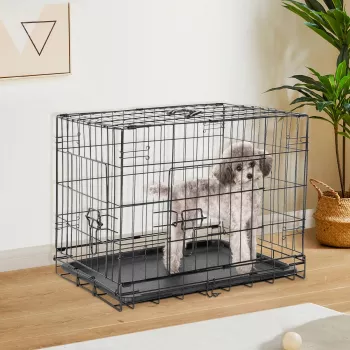
A good crate setup keeps daily routines calmer: meals stay contained, training is simpler, and cleanup doesn’t become a project. Our team built the Extra Large Double Door Folding Metal Wire Dog Cage with Leak‑Proof Pan Tray for practical, everyday use—easy access from two sides, a foldable frame for storage, and a tray that helps protect floors when accidents happen. If you’re working on house-training, managing busy household traffic, or just want a predictable “rest spot” your dog can rely on, this style of crate keeps the setup straightforward. For more guidance, see How to Choose the Best Crate for Your Dog.
What this cage is designed to solve
When a dog has a consistent home base, the whole house tends to run smoother. This crate is designed to help you build routines that are repeatable (and therefore easier for your dog to understand) without creating extra cleanup work for you. For further reading, see Bark to Basics Favorite Products.
- Create a consistent “home base” that supports crate training, rest time, and safe separation when needed.
- Reduce mess stress with a leak‑proof pan tray that can be removed and rinsed without disassembling the crate.
- Make placement easier in real rooms: two doors mean the crate can face a walkway, wall, or corner without forcing awkward reach‑ins.
- Support predictable routines—bedtime, feeding, travel loading, and post‑bath drying—without chasing a dog around the house.
- Fold down for storage when guests arrive, during moves, or when rotating spaces between dogs.
Quick setup plan (home, training, and cleanup)
| Step | What to do | Why it helps |
|---|---|---|
| 1. Choose location | Place the crate where people spend time (living room or bedroom), away from drafts and direct heat. | Dogs settle faster when they can relax near normal household activity. |
| 2. Add comfort layer | Use a crate pad/blanket that fits flat; keep chew‑risk in mind for new crate users. | A comfortable surface encourages calm use instead of pacing. |
| 3. Introduce the crate | Start with the doors open; toss treats inside and feed a few meals near/inside. | Positive association reduces resistance and vocalizing. |
| 4. Practice short sessions | Close the door briefly, reward quiet, and build time slowly. | Gradual duration prevents setbacks and stress. |
| 5. Keep it clean | Slide out the pan tray to wipe/rinse; fully dry before reinserting. | Fast cleanup keeps odors down and protects floors. |
Two doors, fewer headaches: why access matters
Two-door access sounds simple, but it solves a lot of day-to-day friction. If you’ve ever placed a crate where it “fits” only to realize you can’t comfortably reach inside, you’ll appreciate having more than one way in.
- Front and side access make it easier to position the crate against a wall, beside a sofa, or near an entry without blocking the only door.
- Loading is simpler for big dogs or older dogs—use the door that lines up with your dog’s approach instead of turning them sharply.
- Training becomes clearer: one door can be used for routine entry/exit while the other is reserved for cleaning and reset.
- If one side is obstructed (furniture, luggage, baby gate), the second door keeps the crate usable without rearranging the room.
- Easier reach for water bowls, bedding adjustments, and quick checks—especially helpful during nighttime crate routines.
Folding wire design: storage, transport, and everyday flexibility
A folding crate works well for real homes because your needs change week to week. Maybe you want a crate in the bedroom at night, but a quieter corner during the day; or you need to stash it when company stays over. Wire construction also makes supervision simpler, since you can quickly see whether your dog is settling or getting overstimulated.
- Foldable construction helps when space matters—store it flat between uses or bring it along for trips where a familiar “safe zone” helps dogs settle.
- Wire visibility supports supervision: dogs can see the room, and you can spot pacing or signs of discomfort quickly.
- A foldable crate is useful for rotating rooms (sleeping area at night, quiet corner during the day) without needing multiple crates.
- When introducing a new dog or managing multi‑pet homes, a fold‑down option makes temporary separation less disruptive.
- After muddy walks or grooming, the crate can act as a controlled drying/rest spot while keeping mess contained.
Leak‑proof pan tray: keeping floors safer and cleanup faster
Accidents happen—especially during puppyhood, transitions, or when schedules change. A removable, leak‑proof pan tray helps you respond fast and keep odors from lingering, which supports better training habits over time.
Sizing and comfort: setting the crate up for calm behavior
Where this cage fits best: common home scenarios
Helpful add-ons from our store
- Extra Large Double Door Folding Metal Wire Dog Cage with Leak‑Proof Pan Tray
- Lightweight Canister Vacuum Cleaner
Training references we trust
FAQ
How do the two doors help in daily use?
Two doors give you flexible placement, so you can face the crate toward a walkway, wall, or corner and still have easy access. You can also load larger dogs more smoothly from the most convenient side and keep one door available for cleaning or bedding adjustments when space is tight.
How should the leak‑proof pan tray be cleaned?
Remove any debris, wash the tray with mild soap and warm water, rinse well, and dry it completely before sliding it back in. Keeping the tray fully dry helps reduce odor buildup and prevents moisture from being trapped under bedding.
Is a folding wire crate a good choice for crate training?
Yes—wire crates offer airflow and visibility, which can help you supervise settling behavior and keep the space feeling less closed-in. The foldable design also makes it easier to keep the crate part of your routine at home or while traveling, as long as you introduce it gradually and reward calm behavior.









Leave a comment